BIOPHILIC FESTIVAL
Reactivation of an Abandoned Park
A biophilic landscape activation hosted to transform an abandoned family-owned park in Tar Heel, North Carolina, into a place for gathering. Developed in partnership with Hollowtownship Films, the project raised awareness of sarcoidosis in communities near concentrated animal feeding operations (CAFOs) while inviting visitors to experience a rural landscape through the perspectives of those who have known it for generations.
The project began with a series of site walks alongside four generations of my family. Their stories became a form of site analysis, revealing ecological knowledge, family histories, and longstanding relationships with the land. My uncle read the landscape, identifying tree species and describing the environmental conditions throughout the seasons. My ninety-year-old grandfather connected places to family history. My eight-year-old niece's admiration of the rusted playground equipment and vegetative overgrowth revealed value in what may otherwise be perceived as unsightly. My mother and great aunt shared memories of exploring the trails with their elders. While the community rallied to provide labor and materials, it was their stories and perception of the site that ultimately shaped the spatial experience.
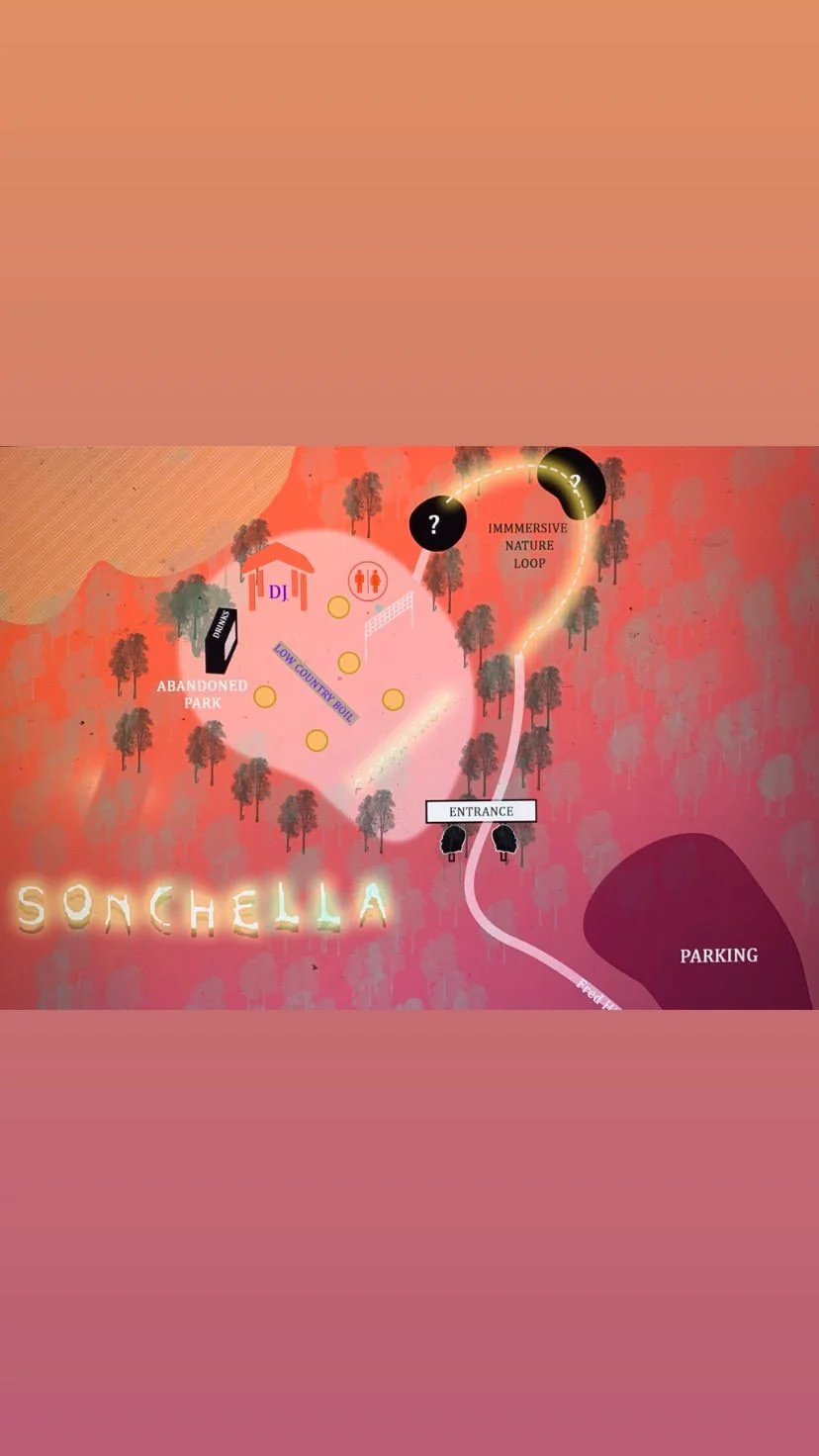
The spatial layout emerged directly from these observations. A natural open area became the setting for dancing, oyster shucking, and conversation. A looping woodland trail offered a quieter experience, guiding visitors through illuminated underbrush and inviting a slower engagement with the landscape. Rather than introducing new forms, the design revealed qualities that were already present, allowing the landscape itself to become the primary medium for interpretation.
This project reflects an approach that guides my work. Each site is understood through the relationships between people and place before design decisions are made. Oral histories sit alongside environmental observation, allowing cultural memory to inform spatial experience. Biophilia extends beyond the restorative qualities of nature to include the relationships people hold with ancestral land and the memories embedded within it. Design is not used to prescribe meaning, but to reveal the identity of a place that already exists.